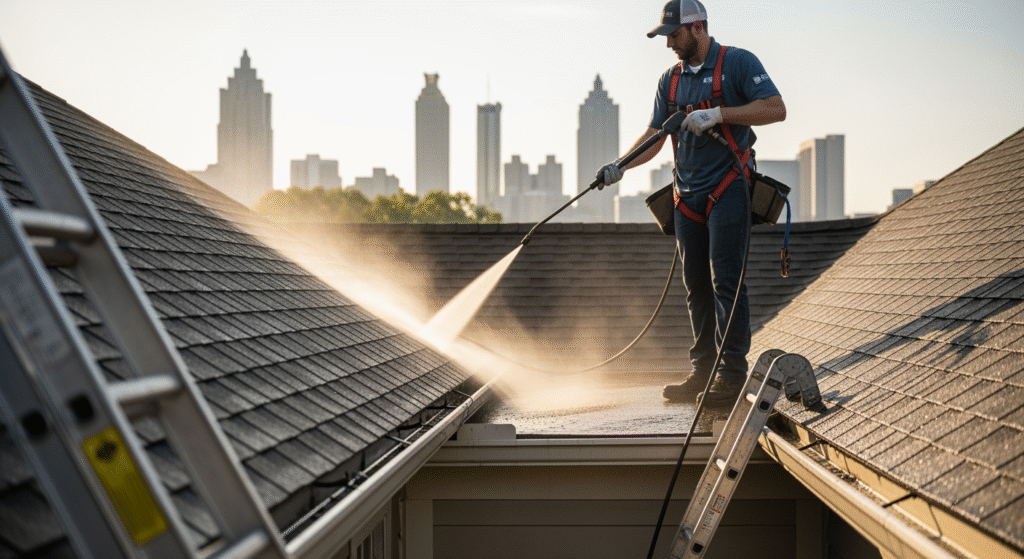
Keeping a tidy, leak-free roof is about more than looks — it protects your home and saves you money over time. If you’re searching for reliable roof cleaning in Atlanta, Ga, you’re in the right place. I’ll walk you through why roofs in this area get dirty so fast, what cleaning methods actually work, and smart steps you can take now to protect your investment. For environmental guidance on runoff and cleaning chemicals, check resources at the Environmental Protection Agency at epa.gov.
Why roof cleaning matters in Atlanta
Atlanta’s warm, humid climate makes it a perfect place for algae, moss, and lichen to grow. That dark streaking you see on shingles is usually algae (Gloeocapsa magma), and while it might look harmless, it gradually breaks down roofing materials. When I talk with homeowners from Buckhead to Decatur, the same worries come up: dark stains, shortened shingle life, and the chance of leaks during heavy storms. Beyond material damage, an unclean roof can also mean lower curb appeal and reduced property value when you go to sell the house.
Regular roof cleaning helps:
– Preserve shingle granules and extend roof life.
– Remove organic growth that can trap moisture and cause rot.
– Improve curb appeal so your home looks cared for.
– Reduce the risk of costly repairs from clogged valleys or gutters.
Working in neighborhoods across the city, I’ve seen how a clean roof brightens a whole block. It’s a small investment that prevents larger headaches later.
Common roof problems in this area and what causes them
Understanding what’s causing the stains and damage makes it easier to treat and prevent them. In Atlanta, these are the most common contributors:
– Algae and black streaks: High humidity and shade from mature oaks and pines provide the perfect environment for algae to thrive. It feeds on limestone filler in shingles and leaves the familiar dark streaks.
– Moss and lichen: Often found on north-facing slopes or shaded yards, moss holds moisture against the roof, increasing the chance of rot and shingle lifting.
– Debris and clogged valleys: Leaves, pine needles, and seed pods collect in valleys and gutters, trapping water and increasing freeze-thaw damage in cooler months.
– Airborne pollution and dust: Urban areas and construction dust can also stick to damp surfaces and make roofs look dirty sooner.
Neighborhoods with large tree canopies — parts of Midtown, East Atlanta, and Decatur — tend to need cleaning more frequently. Where your roof sits in relation to tree cover and sun exposure will determine how often you should schedule maintenance.
Soft washing versus pressure washing for roofs
One of the most common questions I get is whether to use pressure washing on a roof. The short answer: most roofs should not be pressure washed. Here’s why and what I recommend.
Pressure washing sprays water at very high force. That force can:
– Strip protective granules from asphalt shingles.
– Force water under shingles, leading to leaks.
– Damage brittle or older roofing materials.
Soft washing uses low-pressure spray combined with a cleaning solution designed to kill algae, moss, and mildew. The advantages of soft washing include:
– Gentler on shingles and roofing materials.
– The cleaning solution kills organisms at the root so regrowth is slower.
– Safer for gutters, vents, and roof flashings.
For most asphalt-shingle roofs in Atlanta, soft washing is the safer, more effective approach. Tile or metal roofs may require different techniques; a professional can advise based on material and condition.
When pressure may be acceptable
There are a few cases where a higher pressure rinse is useful — for example, to clear heavy mud or after removing thick moss where mechanical loosening is required. Even then, the pressure should be controlled and never aimed directly at seams or under shingles.
How we safely clean roofs: a simple, effective four-step plan
When I approach a roof cleaning, safety and long-term results come first. Below is a practical step-by-step process I use and recommend to homeowners. You can use this list to vet contractors or prepare for your own maintenance.
- Inspection and prep: I start with a thorough roof inspection, checking shingles, flashings, gutters, and any soft spots. Trees near the roof are trimmed back where possible to reduce future debris and shade.
- Protect landscaping and irrigation: Plants and lawn areas are covered or rinsed after treatment to prevent residue from lingering. Proper containment reduces runoff into storm drains.
- Soft wash application: A biodegradable cleaning solution is applied with low-pressure equipment to kill algae, moss, and mildew. The solution is left to dwell so it can work at the roots of the organisms.
- Rinse and follow-up: The roof is gently rinsed and the gutters cleared. I schedule a short follow-up inspection to ensure no regrowth and to check for any missed spots.
These steps help prevent damage and deliver a longer-lasting clean. If a roof has underlying damage, I’ll recommend repairs before cleaning to avoid worsening any issues.
Local rules, runoff, and homeowner associations
Many Atlanta homeowners overlook local considerations that affect roof cleaning. Before any work begins, check these items:
– HOA rules: Some associations have strict rules about contractors, cleaning chemicals, and visible equipment. Verify any approvals needed before scheduling.
– Permits and local codes: Most routine roof cleanings don’t require permits, but large-scale work, especially that impacts stormwater systems, may. It’s wise to ask your contractor if permits apply.
– Water runoff and drains: Because roof cleaning involves chemicals and organic debris, responsible contractors protect storm drains and collect or treat runoff to avoid polluting streams and rivers. That’s not only good practice — it’s required in many urban areas.
As someone who works in the city, I always place a priority on waste containment and proper disposal. It protects neighborhood waterways and keeps your property compliant with local expectations.
How often should you clean your roof and what it costs
Frequency depends on roof material, tree cover, and the slope and orientation of your roof. Typical guidelines I follow:
– Light tree cover, mostly sunny: every 4–6 years.
– Moderate to heavy shade or lots of nearby trees: every 2–4 years.
– Severe moss or algae buildup or after storm damage: as needed, sometimes yearly for problem areas.
Cost varies with roof size, pitch, access, and condition. In my experience, simple soft-wash cleanings for typical single-family roofs in Atlanta are more affordable than many expect, and they pay back over time by extending shingle life and preventing repairs. Get written estimates and ask what’s included — containment, gutter cleaning, spot repairs, and follow-up checks are items you want spelled out.
Signs your roof needs cleaning
If you’re not sure, look for these common signs. If you spot any, it’s time to schedule an inspection or cleaning.
- Long, dark streaks across multiple sections of the roof.
- Green patches, moss, or raised shingle edges indicating trapped moisture.
- Visible granule loss on gutters after heavy rain.
- Increased energy bills due to reduced reflective performance.
Finding any of these early can save you from larger repairs later.
Trending topics in roof care you should know about
Two trends are shaping how homeowners and pros approach roof cleaning right now:
1) Eco-friendly cleaning solutions and water reclamation. More customers want biodegradable cleaners and reduced runoff. Contractors are increasingly using low-impact chemistries and systems that collect rinse water for proper disposal, reducing environmental impact and runoff into local waterways.
2) Drone inspections and thermal imaging. Drones give a safe, fast way to inspect roof conditions and document problem areas without climbing on fragile roofing. Thermal imaging can reveal moisture trapped under shingles or heat loss points that routine visual inspections would miss.
Both trends help homeowners make smarter decisions and reduce unnecessary disturbance to roofing materials.
What to ask your roof cleaning contractor
When I hire or recommend someone, these questions give you a clear picture of quality and safety. Ask any contractor you interview:
– Do you use soft wash techniques for asphalt shingles?
– Are your cleaning solutions biodegradable and safe for plants and pets?
– How do you manage runoff and protect gutters and landscaping?
– Do you carry insurance and can you provide references for local jobs?
– Will you provide before-and-after photos and a follow-up inspection?
A good contractor will welcome these questions and provide straightforward answers. If they’re evasive, consider a different option.
DIY tips and when to call a pro
Some homeowners prefer to DIY. If you plan to, keep these safety tips in mind. Climbing on roofs is risky; if you feel uncertain, call a pro.
– Never use a pressure washer on asphalt shingles.
– Use protective gear, including fall protection when working on steep slopes.
– Choose cleaners labeled safe for roofing and rinse plants promptly after treatment.
– Work on cool, dry days to avoid slippery surfaces.
Call a professional when your roof is steep, has significant moss or damage, or if your home is under an HOA with strict rules. Pros bring safety equipment, containment systems, and experience that keeps your roof intact.
Real benefits homeowners see after a professional cleaning
After an effective roof cleaning, homeowners typically report immediate visual improvement and long-term benefits. I’ve helped clients in neighborhoods from Buckhead to East Atlanta see results like:
– A brighter roof that increases curb appeal and marketability.
– Fewer leaks and less water intrusion during heavy rains.
– Lower long-term maintenance costs and delayed need for full replacement.
– Peace of mind knowing the roof is inspected and any issues flagged early.
Those benefits matter when you’re protecting a major investment. A clean roof is often the unsung maintenance item that keeps a house performing well.
Final thoughts and a straightforward next step
Roof cleaning in Atlanta, Ga, makes sense for nearly every homeowner here at some point. With humid weather, large tree canopies, and regular storms, letting algae and debris accumulate is an easy way to shorten the life of your roof. Prioritize soft washing, ask the right questions, and choose a contractor who cares about containment and long-term results.
If you’re ready to protect your roof or want a clear estimate tailored to your neighborhood and roof type, reach out to Aqua-Nomics for a consultation: Aqua-Nomics. I’ve seen the difference proper care makes, and taking action now prevents bigger problems down the road.